
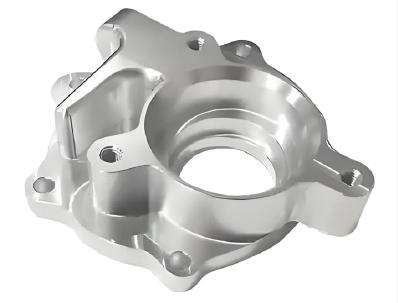
Machining produces the shape; the surface treatment decides how the part looks, how it wears and how long it survives its environment. Choosing the finish early avoids redesign later, because some treatments change dimensions and others restrict the material you can use.
As-machined finishes
A part can leave the machine with no further treatment. Typical surface roughness from milling and turning sits around Ra 1.6 to 3.2 micrometres, which is acceptable for internal components and non-cosmetic surfaces. Finer finishes down to Ra 0.8 or better are achievable with lighter finishing passes, and below that grinding or polishing becomes the economical route.
Anodising
Anodising applies only to aluminium. It converts the surface into a hard oxide layer that resists corrosion and wear, and it accepts dye, so it is the usual choice where appearance matters. Type II is the general purpose version and adds a few microns per surface. Hard anodising, Type III, builds a thicker and much harder layer for sliding and wear applications, and it adds enough thickness that tight bores and shafts must be machined undersize to allow for it.
Electroplating
Nickel plating gives even corrosion protection and a bright, hard surface suitable for decorative and functional use. Chrome plating adds extreme hardness and a low friction surface, typically used on shafts and sliding components. Zinc plating, or galvanising, is the economical choice for steel parts that need corrosion protection without a cosmetic requirement. All plating adds thickness, so critical dimensions need allowances agreed before machining.
Passivation
Passivation is used on stainless steel. It is a chemical treatment that removes free iron from the surface and restores the passive chromium oxide layer that gives stainless its corrosion resistance. It does not change dimensions or appearance meaningfully, and it is strongly recommended for any stainless part that has been machined, because machining drags free iron across the surface.
Bead blasting and tumbling
Bead blasting produces a uniform matte texture that hides tool marks and gives a consistent cosmetic appearance, often applied before anodising. Tumbling deburrs edges and smooths surfaces on batches of small parts, and is far cheaper than hand deburring at volume.
Matching finish to application
Decide what the surface has to do. For corrosion resistance on aluminium, anodise. On steel, plate or paint. For wear, consider hard anodising or chrome. For appearance, bead blast then anodise. For stainless, passivate as a matter of course. Then check whether the added thickness affects any toleranced feature, and adjust the drawing before production rather than after.
We handle galvanising, nickel plating, chrome plating, passivation and anodising in house alongside machining, so finish allowances are built into the process rather than discovered at inspection.